
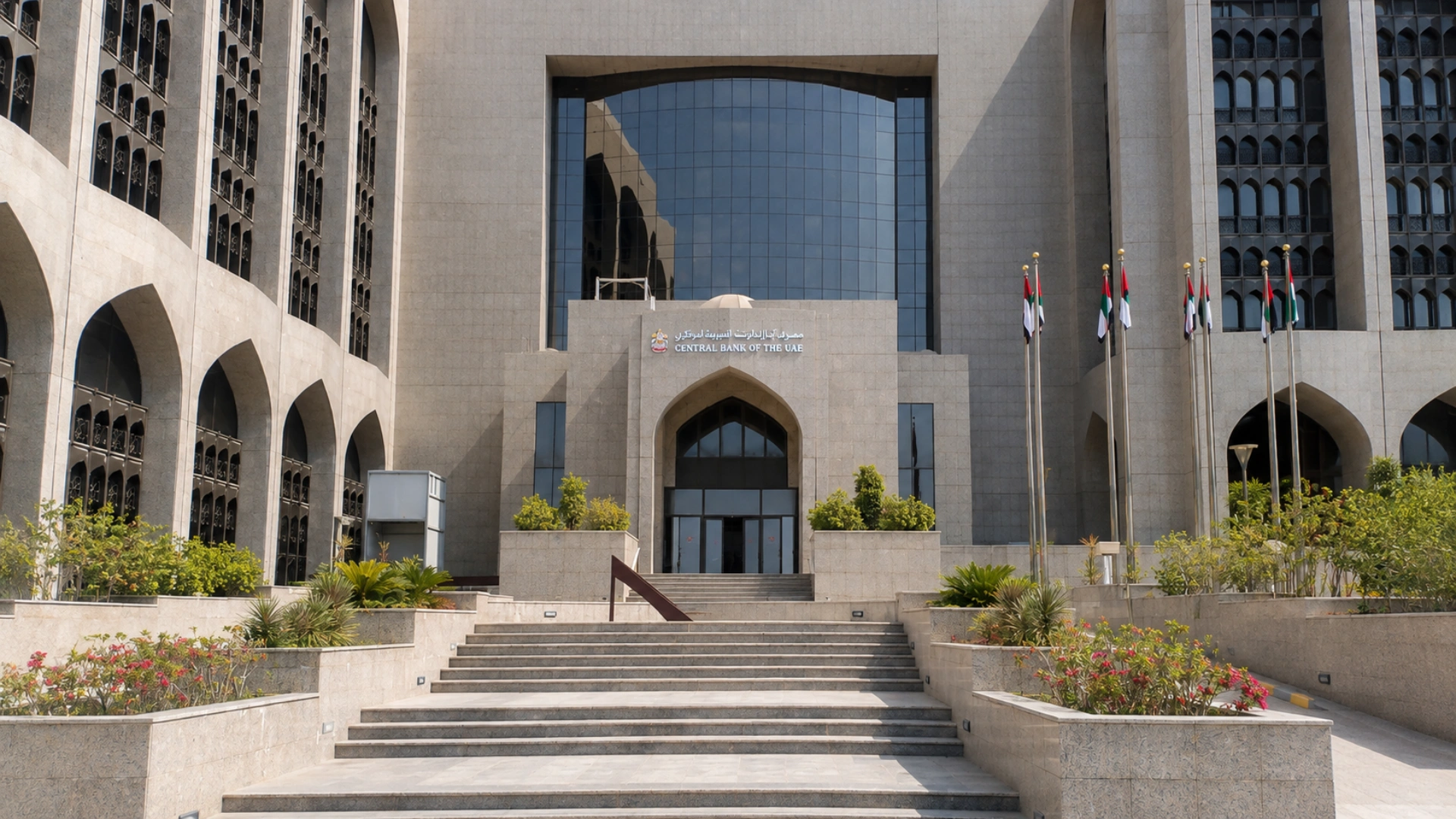



Executive Summary: UAE banking sector assets total AED 5.42 trillion, with a 17% capital adequacy ratio and 146.6% liquidity coverage. First Abu Dhabi Bank is rated Aa3/AA-/AA-. The statutory Deposit Guarantee Scheme covers AED 100,000 per depositor per bank. In March 2026, the CBUAE’s AED 1 trillion resilience package held the system firm through regional conflict. No bank failed, and deposits grew 1.9%. The dirham has held at 3.6725 since 1997; S&P rates the UAE AA/stable.
For years, the question that kept nagging at me was a simple one: are Dubai banks safe? Zero income tax is great, but what’s the point if my money isn’t secure once it’s here?
I’ve now moved my entire financial life to the UAE. Every dirham I own sits in a UAE bank account, by choice. I could bank in the US or Canada tomorrow. I don’t want to. And in 2026 I got to watch this banking system do something most systems never have to prove in public: get tested, hard, and hold firm.
So let me give you the honest, updated answer, not marketing. The short version: yes, UAE banks are among the safest in the world. But the reasons have changed since most articles on this topic were written, and there’s one outdated myth I need to kill for you. Let’s get into it.
I Watched Dubai’s Banks Get Stress-Tested in 2026
Here’s the thing nobody could say a year ago: we now have real, recent proof.
In March 2026, regional conflict spilled over and briefly disrupted parts of the UAE’s infrastructure. This is exactly the kind of moment when weak banking systems wobble and depositors panic. What actually happened? On 17 March 2026, the Central Bank of the UAE approved a five-pillar Financial Institution Resilience Package backed by AED 1 trillion in its own assets: liquidity support, capital buffer relief, and a clear instruction to banks to keep lending (The National).
Read the results carefully, because this is the whole ballgame:
- No UAE bank failed. No depositor lost money. No bank missed an obligation.
- The package was precautionary, not a rescue. The system wasn’t breaking; the Central Bank simply pre-loaded a trillion dirhams of firepower.
- The banking sector actually grew from March to May 2026: assets up 2.1%, deposits up 1.9%.
- S&P reaffirmed the UAE at AA with a stable outlook right in the middle of it.
I was still a kid in North America during the 2008 crash, but I grew up in its shadow, watching what a banking system under real stress does to ordinary families and how long it takes them to recover. That’s the backdrop I carry.
So when 2026 hit and I watched the UAE do the opposite of wobble, a government with enormous reserves calmly stepping in before anything broke, it landed hard for me. That single episode told me more about the safety of my money than a decade of glossy brochures ever could.
What the Ratings Actually Say
I’m not asking you to take my word for it. The big three agencies do the heavy lifting here.
First Abu Dhabi Bank, the largest bank in the country, is rated Aa3 by Moody’s, AA- by S&P, and AA- by Fitch, all with stable outlooks. That places it among the highest-rated banks not just in the Middle East, but globally, with total assets of roughly AED 1.49 trillion. When your biggest lender sits in the same rating tier as the strongest banks in the world, that sets the tone for the whole system.
Zoom out to the sector and the numbers are just as reassuring: a capital adequacy ratio of around 17%, a liquidity coverage ratio above 146%, and total banking assets of AED 5.42 trillion (about USD 1.48 trillion), all comfortably above international minimums.
The UAE isn’t the single safest banking jurisdiction on Earth. That title usually goes to Switzerland, Germany, or Singapore. But across the entire GCC, UAE banks dominate the top of the leaderboard: First Abu Dhabi Bank, Abu Dhabi Commercial Bank, Emirates NBD, and Abu Dhabi Islamic Bank all rank among the region’s strongest. Top 10 in the world, top of the GCC. That’s the neighbourhood your money lives in here.
What Actually Makes UAE Banks This Safe
Forget the app design and the marketing. Here’s the structural stuff that matters.
Conservative capital. UAE banks hold serious capital against their lending. That 17% sector capital ratio isn’t an accident. It’s a culture.
A genuinely strict lending culture. This is the part Westerners underestimate. In North America, credit is easy: 0% down, cosigner, done. Here? Forget it. There are no 0%-interest, no-money-down mortgages handed out to anyone with a pulse. The UAE requires real down payments, real paperwork, and thorough financial reviews.
I have clients who arrive expecting to qualify for a car loan in week one and can’t, especially if they’re self-employed and haven’t built a banking history yet. It’s frustrating in the moment. It’s also exactly why the banks are so safe. Conservative lending is boring, and boring is what protects your deposits.
Credit cards you have to earn. New arrivals with no salary history often can’t just get a credit card. Banks will ask you to lock funds as collateral, effectively a secured card, until you’ve built a track record of transfers in and out. Annoying, yes. But it’s the same discipline applied at the consumer level.
Mortgages that take patience. Qualifying for property financing is not the Wild West people imagine. Expect roughly six months of history before a 50% loan is realistic, and up to 24 months of solid banking before you’re looking at an 80% loan-to-value, with plenty of checks along the way. (Managing that documentation trail cleanly is a big part of what our accounting and compliance team does for clients.)
The Deposit Insurance Question: What Actually Changed
Here’s where I have to correct the internet, including older versions of my own thinking.
For years the standard line was: “Dubai has no deposit insurance.” That framing is now outdated. The UAE has established a statutory Deposit Guarantee Scheme that protects eligible deposits up to AED 100,000 per depositor, per bank if a licensed bank were ever to fail. That puts it in the same family as the US FDIC (USD 250,000) and the EU (€100,000).
There’s also Sanadak, the UAE’s independent financial and insurance ombudsman launched by the Central Bank, where you can escalate a dispute with your bank and get a binding decision.
But let me be straight with you, because the AED 100,000 figure isn’t really the point, and it isn’t in most Western countries either.
If a bank collapses in the West and you had a million dollars in it, that “insured up to $250k” number means you’re waving goodbye to most of your money. And in a genuine systemic crisis, insurance schemes pay out slowly, the government gets made whole before you do, and whatever you eventually recover has often lost buying power to currency devaluation. Deposit insurance is a backstop for a bank failure. It is not a force field.
So the real question isn’t “is there a deposit insurance sticker on the door?” It’s “how likely is this bank to fail in the first place, and who stands behind it if the whole system is stressed?” On both counts, the UAE answers better than almost anywhere. The banks are conservatively capitalised, the Central Bank has a trillion dirhams of demonstrated firepower, and, as 2026 proved, the government moves early. That’s the protection that actually matters.
Are Government-Owned UAE Banks Safer for Large Deposits?
Short answer: for large balances, yes, and it’s one of the most underrated features of banking here.
Many of the UAE’s biggest banks are partly government-owned, not 100%, but through sovereign and public shareholders. First Abu Dhabi Bank, for example, counts Abu Dhabi’s sovereign investment vehicles among its major shareholders.
Why does this matter for your money? Because it aligns the whole ecosystem. This isn’t a fragmented system where one weak bank fails alone in the dark. It’s an interconnected structure where the strongest balance sheet on the planet, the government’s, has both the means and the motivation to keep the system whole.
And the liquidity here is genuinely staggering. Money pours into Dubai daily. To give you just one visible example: the Dubai Land Department charges a 4% transfer fee on every property sale, and with billions of dirhams in property changing hands, that’s an enormous, continuous stream of government revenue feeding national reserves. Deep reserves are exactly what let a central bank write a trillion-dirham cheque without blinking.
So if you’re sitting on a large balance, well above that AED 100,000 guarantee line, the practical safety comes from the strength and government backing of the institution, not from an insurance certificate. Bank with a top-tier, systemically important, partly government-backed institution, and you’re about as protected as a depositor can be anywhere in the world.
Is My Money Safe in a DIFC-Regulated Private Bank?
This is one of the most common questions I get from high-net-worth clients moving over from London, New York, or Geneva, and the answer has an important nuance most people miss.
The Dubai International Financial Centre (DIFC) is a financial free zone with its own regulator, the Dubai Financial Services Authority (DFSA), and its own English-language, common-law courts. It’s separate from the onshore UAE system run by the Central Bank. Many of the world’s biggest private banks operate their Dubai wealth arms out of the DIFC.
Here’s the key distinction: a DIFC-regulated private bank is not covered by that onshore AED 100,000 Deposit Guarantee Scheme. Instead, the DFSA requires firms to segregate client money: your assets are held in ring-fenced client accounts, and on the firm’s insolvency they are legally excluded from the firm’s estate and protected from its creditors. In plain English: your money is kept separate from the bank’s own money, so it can’t simply be swallowed if the firm goes under.
So which is “safer”? They protect you differently:
- Onshore, CBUAE-licensed banks (Emirates NBD, FAB, ADIB, Wio, etc.) give you everyday banking plus the statutory AED 100,000 guarantee and Central Bank backstop. This is where most residents and business owners should hold their operating money.
- DIFC private banks suit wealth and investment relationships, where protection comes from client-asset segregation plus the strength of a global institution, not a government deposit payout.
The mistake I see people make is assuming a famous international name in the DIFC is automatically “safer” than a domestic bank. For core deposits, the onshore guarantee and the sheer strength of the UAE’s top banks are hard to beat. Match the structure to the job.
Secure Online Banking in Dubai
Safety isn’t only about solvency. It’s about your day-to-day access and security too. The good news is the UAE has quietly become one of the best places on earth for digital banking.
The onshore digital banks here are regulated by the Central Bank to the exact same standards as traditional banks: same capital rules, same deposit guarantee, same oversight. Wio Bank is the one we now use ourselves. It’s majority-owned by Abu Dhabi’s ADQ and Alpha Dhabi (about 65%), with e& (Etisalat) at 25% and First Abu Dhabi Bank at 10%, so it’s effectively government-backed, capitalised at AED 2.3 billion, and fully CBUAE-licensed. (I broke down exactly who owns it and how it works in our Wio Bank ultimate guide.)
On the security side, expect the modern standard: end-to-end encryption, biometric login, secure PINs, and real-time transaction alerts. If online banking is your priority, my honest advice is to open accounts at two CBUAE-licensed banks. It doubles your deposit-guarantee coverage to AED 200,000 and gives you redundancy: if one app has an outage, you still have full access through the other. We walk through the strongest options in our guide to the top 3 online banks in Dubai.
Choose Your Bank Wisely
The banks here are safe, yes. But “safe” doesn’t mean “identical.” Pick one you’ll actually enjoy using. Here’s where we personally bank and place clients:
- Wio Bank: our full-time business banking. If you’re paying GenZone, it lands in a Wio account. We moved from Rakbank (also excellent) purely for the digital experience. We’re one of Wio’s top partners, and clients can even use our Wio referral setup.
- Emirates NBD: a favourite for personal banking, and business banking too. Clients love it.
- First Abu Dhabi Bank: the top-rated name in the country. Hard to argue with Aa3/AA-/AA-.
- Abu Dhabi Islamic Bank: one we lean on heavily for business banking.
Why Banking in Dubai Is Hard for Westerners, and How We Fix It
Now the part the brochures leave out. If you’re coming from the Western world, opening a bank account in the UAE is not easy. The same conservative, KYC-heavy culture that makes these banks so safe is precisely what makes them slow and demanding to get into.
Self-employed? Expect scrutiny. No local history? Expect a secured card and a waiting period. Miss a document or misread what a compliance officer needs? Expect a rejection, and once you’ve been rejected for a business bank account, the next attempt gets harder, not easier.
This is the core of what we do at GenZone. Banking isn’t a bolt-on for us. It’s a central pillar of every Dubai business setup and relocation plan we run. We’ve worked with every leading bank in the UAE, we know the relationship managers and compliance teams personally, and we know exactly how each bank likes an application packaged. That’s the difference between an account that opens in record time and one that stalls for months.
And we manage the entire thing end to end through GenZone Launchpad, our all-in-one client platform. Company formation, documents, banking, compliance, visas: it all lives in one place, so instead of chasing ten parties across a dozen email threads, you watch your setup progress from a single dashboard. It’s built so that the hardest part of moving your life and money to Dubai feels genuinely simple.
Getting Started
Before you can open your bank account, you need one foundation in place first: either a golden visa (typically via a qualifying property purchase) or a UAE company with its business bank account, followed by your personal account.
That’s the natural on-ramp, and it’s exactly what we handle:
- Dubai company setup: end to end, done for you.
- Mainland company setup: for trading onshore and across the UAE market.
- Free zone company setup: 100% ownership and streamlined structures.
- Accounting & compliance: the ongoing financial trail that keeps your banking (and your loan eligibility) healthy.
So, are Dubai banks safe? After moving my whole financial life here and watching the system prove itself in 2026, my answer is an easy yes. Just make sure you get into the right one properly the first time.
This article is for general information only and is not financial, legal, or tax advice. Banking regulations and deposit protection rules can change. Verify current details with the relevant bank, the Central Bank of the UAE, the DFSA, or a licensed advisor before making decisions.
