






Since 2022, GenZone has grown into one of the most trusted names in UAE business setup. We rank among the top four corporate service providers in the Dubai free zones and hold the platinum award, the highest recognition the free zones give. We also have the highest client renewal rate in the market, and not a single negative review filed with the free zone authorities.
We’ve recently expanded into US company formation, offering one of the fastest EIN turnarounds for non-residents at just 3 to 5 working days, so founders can now build in Dubai and the US with one trusted team.
This July we launched the GenZone client platform, bringing Dubai setup, US formation and accounting into one dashboard, backed by a dedicated team for every client. Our HR and hiring platform is next, with more to follow.
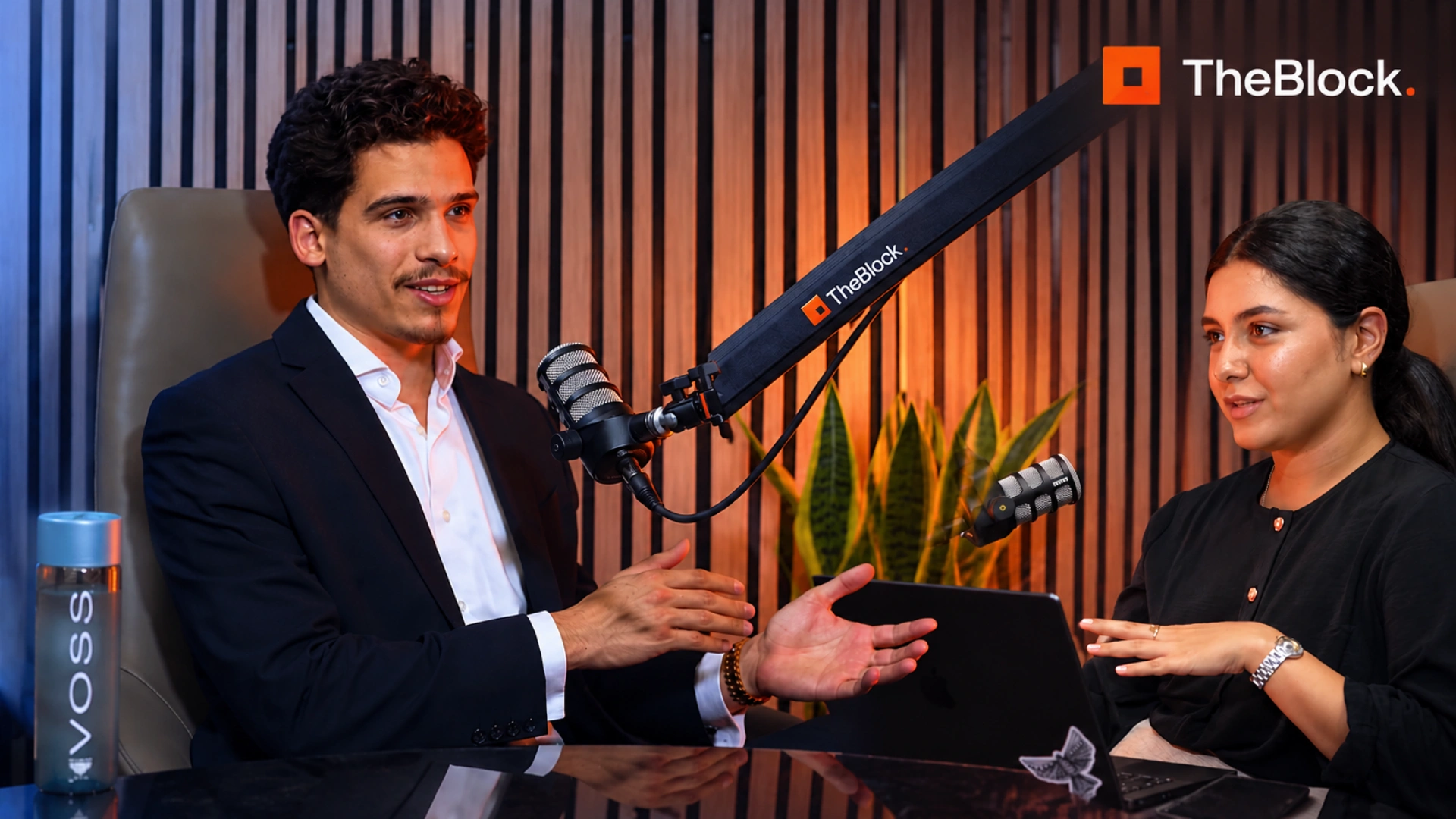
In this conversation, one of our co-founders, Kevin McKenzie shares how we turned a slow market into the moment to build that platform, why so many Dubai founders now open a US company, how we hire, and what’s still to come.
Below is an edited version of the interview, lightly condensed for clarity.
Niki: It’s been a year since we last spoke. I’ve been watching GenZone evolve on social media. What’s been happening?
Kevin: We’ve done a lot in the last year. We always try to grow the business, and not just in terms of profit, but in terms of the services we give our clients. Our core focus is business setup in Dubai, but we’re always trying different services and seeing what resonates. If it doesn’t, we stop. If it really does, that’s something else we can help clients with.
At GenZone, what we want to do differently from any other company that helps people establish themselves in the UAE is make it a one-stop shop, where you can get everything done in one place.
Watch Kevin’s full conversation with Niki Kazeroonian on Talk of the Town below.
GenZone in a nutshell
Niki: For anyone who missed our first episode, give us a quick intro to GenZone.
Kevin: GenZone is a business setup firm. We started in 2022 as a Dubai business setup firm, and recently we expanded into establishing companies in the US. We assist with other jurisdictions too, but those are our two core focuses.
We’re one of the largest corporate service providers (CSPs) in the UAE. In basic English, we help people set up companies. For the Dubai free zones, I’d say we’re around the fourth biggest. There are bigger competitors, but what we do differently is offer everything in one place: accounting, bookkeeping, tax compliance, licence management, formation, and now HR.
Niki: What are you proudest of?
Kevin: We reached the platinum awards with the Dubai free zones, which is the highest award you can get. We also have the highest renewal rate. Clients who set up with GenZone in Dubai are more likely to renew, which tells you they’re satisfied. We’re transparent upfront with pricing and there are no hidden fees, so clients can plan properly.
In 2022 we were two people. Now we’re around 30. When we last spoke, we were maybe ten.
Niki: What would you say is the real reason clients choose you?
Kevin: It’s not the portal, and it’s not that our pricing is fair. It’s that we’re very transparent. We communicate well, we’re honest with people, and we deliver the service we say we will.
Niki: I think your biggest strength is that you’re young. You want to be “the Apple of CSPs,” and you rarely hear that in this industry. In Dubai, it started with PROs who would go to immigration to get your licence and visa. That evolved into today’s corporate service providers, but many still work exactly the way PROs did 10 or 15 years ago. Hearing someone talk about innovation, AI and software is a breath of fresh air.
One portal for everything
Niki: You mentioned people can set up their business on the platform. How does that work?
Kevin: You can go to genzone.com right now, click “Launch your business,” create an account, and see exactly what setting up your company looks like. Inside the portal you can set up and manage your Dubai company, set up an American company, and handle your accounting. An HR platform for hiring locally and internationally is coming in the next couple of months.
Some clients have a US LLC and three Dubai companies. Before, they’d be searching their Google Drive or chasing a PRO on WhatsApp who doesn’t reply. Now they log in and click: what’s happening with my Dubai company, my US company, I want to open a new one, I want a new visa.
Niki: Do people really set up without speaking to anyone?
Kevin: That surprised me at first. Moving to Dubai is a big deal, so you’d expect people to want a call. But some just want to get started, especially when they trust you. Some have bought packages, never spoken to us, and had a flawless experience.
You still get human access, though. It’s not “raise a ticket and wait two weeks.” Every client gets a WhatsApp group with six or seven team members who stay with them for years.
Niki: Does the portal lower the cost for clients?
Kevin: Absolutely. Hiring people costs money, and we pay fair salaries, not below market. If we had a team of 200, we’d be paying 200 salaries every month. Because of the technology, we keep our costs down without sacrificing quality, so we don’t have to charge more.
Compared with a similar competitor, we’re probably ten times smaller in manpower. In this day and age, running lean is really only possible with AI, plus hiring the right people. When we were a team of 10 or 15, we probably should have been 30, 40 or 50. That’s why we’re now putting much more emphasis on developers. We want to be the Apple of business setup, whether it’s Dubai or the US.
Turning a downturn into a pit stop
Niki: Apart from the platform, what has changed since we last spoke?
Kevin: When the conflict started early this year, volume in Dubai dropped. We’d always worked across jurisdictions, but we’d put most of our emphasis on the UAE. So we used that time to diversify and push our US services. Dubai has since bounced back significantly.
It’s like Formula 1: sometimes you have to go into the pit stop for new tires and oil. With fewer Dubai setups coming in, we had breathing room. We developed the platform from the start of the conflict and launched it in July. It was a blessing and a curse. We lost some money with fewer businesses, but it let us step back and ask how to make the business better.
We also grew much more in the US. We can now register companies in multiple states, including Wyoming, Delaware, New Jersey and Florida. We’d been doing US formations for years, but not at this level. Now it runs like a machine.
Niki: Is the US side a separate platform?
Kevin: No, it’s inside the same GenZone platform. We want to make life easy for clients, so everything sits in one dashboard. The accounting software is next. Think of something like Zoho, fully integrated, where you can create invoices and maybe even connect your bank.
The rejected payment that started it all
Niki: What’s the difference between setting up in Dubai and setting up in the States?
Kevin: The US is a lot quicker and a lot cheaper. But don’t confuse the two. A Dubai setup gives you a residency visa. A US setup typically doesn’t, unless you invest around $100,000 plus legal fees and qualify for an E-2 visa.
So a US company is usually something you set up to benefit your Dubai company, especially for payment processing. Say you run a Dubai company and charge clients in US dollars. The client pays in dollars, Stripe or another processor converts it into dirhams, and it lands in your bank. That’s around 1% in FX fees.
On top of that, a Dubai Stripe account typically has slightly lower card acceptance rates. If you process 100 payments, maybe 95 go through, while a US account does a bit better. That margin matters. If a payment fails, the customer may decide it’s not meant to be.
Niki: Is that how GenZone got into US formations?
Kevin: Exactly. In 2022 or 2023 I had a client who was really happy with our Dubai proposal. I sent him a payment link from our Dubai Stripe. It was rejected the first time, and he disappeared. I lost that client because of one rejection.
I didn’t want that to happen again, so I set up an American company for GenZone to improve acceptance rates. Then we noticed clients had the same problem, and many already had US companies. So we turned it into a proper service.
Niki: We rarely think about payment processing when choosing a jurisdiction. We think about tax and trade benefits. In crypto, we constantly struggle with fiat on-ramping, and it’s much easier in some jurisdictions. You’ve got me thinking.
| Dubai free zone company | US LLC | |
|---|---|---|
| Main purpose | Your operating base and residency | A supplement for USD payments and banking |
| Residency visa | Yes | Typically no (E-2 needs ~$100,000 investment + legal fees) |
| Speed and cost | Slower, more expensive | Faster, cheaper |
| USD card payments | ~1% FX conversion, slightly lower acceptance | No conversion, higher acceptance |
How fast is a US setup, and who gets the tax?
Kevin: In a state like Wyoming, it’s around one day. If we started today, your licence could be issued today or tomorrow. The full sequence looks like this:
- Company registration: about 1 day in a state like Wyoming.
- EIN (the company’s US tax ID): about 3 to 5 working days.
- Bank account: about 1 to 2 days.
So you’re looking at roughly one to one and a half weeks to have an American company with fully operational banking. Each state varies, and the right one depends on the person. Maybe someone is better off in Florida, maybe not. That’s why we like to speak to clients first. I don’t want to register something and hand someone the wrong thing.
Niki: What about taxes? People must assume a US company means paying US tax.
Kevin: That’s a common misconception. As a general rule of thumb, if you manage a company like a marketing business in the US from Dubai, you owe your taxes to Dubai, not the States. You still have to file an information return, or potentially a tax return, to tell the US what happened. But you pay tax in the UAE, which is a huge advantage given how low taxes are here.
Every situation differs, and some cases will have US tax exposure. That’s why we have in-house CPAs who specialise in cross-border taxation. Almost every CPA I’ve spoken to in the US understands only US and cross-state taxation, not non-residents who own an American company. You also need to register that company for UAE corporate tax and handle bookkeeping and compliance. We have experts on both sides.
Every founder’s situation is different. This is a general rule of thumb, not tax advice, and our cross-border tax team is happy to review your case.
How we hire, and the HR platform we’re building
Niki: You talk a lot about hiring A players. How do you identify one?
Kevin: Someone can be disguised as an A player when they’re really a B or C player. You can usually tell by how they communicate. That’s why one call is never enough. There should be multiple rounds, and you should cross-check what they tell you.
The mistake most people make is hiring way too quickly. My checklist:
- Do two or three interviews, not one.
- Give them a test task.
- Cross-check what they say against their CV and LinkedIn.
- Ask questions that are actually relevant to the role.
People get lazy. They work with a poor recruitment agency, get two candidates, and pick one because the agency says “this guy’s really good.” That’s a huge mistake.
Niki: And when a hire doesn’t work out?
Kevin: Don’t stick with them, and don’t feel bad. We recently hired a top developer from a big UAE bank. Great guy, everything looked fine, but we realised quickly he wasn’t an A player for our company. Three weeks, done.
Don’t keep someone for two or three months, paying salary and a visa, thinking it’s too late. The real cost isn’t the salary. It’s the opportunity cost of not having the A player who gets things done properly.
Niki: And one wrong hire can hold the whole team back.
Kevin: Exactly. Imagine your whole team lives in one house and goes running together at 7 a.m. Then someone new moves in, wakes at 7:30 and jogs instead. Either others drift down to their level, or they stay sharp but resent someone doing less, possibly for the same pay. Expectations should be very similar for everyone: response times, responsibilities, goals. Hire people who are better than your current staff, or at least on the same level.
Niki: Recruitment firms never worked for us. Every hire through referrals succeeded, and every agency hire didn’t. We weren’t given the chance to properly due-diligence candidates.
Kevin: We’ve seen the same. If you’re a founder whose time is worth $300 to $600 an hour, spending hours sifting through people is not where your effort should go.
Bringing our hiring process to clients
Niki: So what will hiring through GenZone look like?
Kevin: We want the platform to be so good that people use it just to hire, even without setup or accounting needs. The process:
- You log in and give us the requirements for the role.
- Our recruiting team sources candidates, runs initial interviews and prepares CVs.
- Each candidate gets a profile in the portal, possibly with a voice note or short video about their experience.
- AI checks the CV against LinkedIn, and against interview transcripts, flagging anything that doesn’t match.
- You review profiles one at a time and give feedback, like “must speak German” or “needs banking experience.”
- That feedback trains the system, and if you don’t hire, we bring you a new set of candidates.
Nobody wants to read 50 CVs, me included. So the idea is to gamify it and make reviewing candidates properly feel easy, even fun.
Niki: That will help smaller companies that can’t afford in-house HR.
Scaling from 10 to 30 without losing five stars
Niki: What have you learned growing from 10 people to 30?
Kevin: Being a lot more hands-off is super hard. As a founder, you want to do everything. But I love it now. God forbid something happened to me today, the business would still be okay. No business should be founder-dependent.
The rest is setting the right expectations with management. Growing isn’t difficult if the people you hire know how to do the job and have done it before. Good people delegate on their own. The problem is hiring someone who’s never done it and handing them everything.
Niki: Many boutique firms stop growing because they can’t keep their service quality as they scale.
Kevin: Right. If you have five stars, you need to keep giving a five-star experience. We’ve never had a single negative review submitted directly to the free zone authorities. As far as I know, we’re the only CSP that hasn’t. That comes from clear SOPs, training everyone properly and setting the right expectations.
Niki: I think it’s also because you keep your employees happy. In client-facing work, unhappy employees can’t keep clients happy.
Kevin: I agree. We’ve let people go, but no one has ever left us on their own. We pay well, but it’s more than that. I genuinely care about my team. When there are disagreements, I help mediate. Most office drama comes from poor communication. Someone reads a message as angry when it wasn’t. Keeping an open dialogue is super important.
Keeping up with compliance across 40+ free zones
Niki: UAE regulators move fast. New licence activities appear, others get removed, and Dubai alone has more than 40 free zones with different rules. How do you keep up?
Kevin: We do something I don’t think any other top-20 CSP does: we focus on only about three free zones, and 99% of our clients go into one of them.
It used to be that each free zone had a clear advantage: one for media, one for finance, one for crypto. Today, about 99% of business activities can go into almost any free zone. So we stick to one main zone and a couple of others, and we’re issuing trade licences there every day.
Because we’re one of the biggest CSPs there, the authorities tell us about changes. We also learn first-hand. Many media activities disappeared at renewal and clients had to switch. Some HR activities changed. Education activities became regulated in some cases. Doing it constantly is what keeps us informed.
Niki: Businesses are also far more international now, even for first-time founders. How do you handle the cross-border side?
Kevin: We have tax experts and business advisors in almost every major country our clients come from, including the UK, Canada, Australia and India. A lot of firms give you only the Dubai information. They either tell you to find your own advisor back home, or tell you that you don’t need to pay tax there without knowing what they’re talking about.
Take an Australian client moving to Dubai, which is a huge market for us. It’s not just about opening a Dubai company. They need an actual plan: dissolve the Australian company or keep it running, understand the tax implications of leaving, and know exactly what to do and how. Many people run international businesses but never get international advice.
Why honest advice sometimes costs the sale
Niki: In crypto, founders in Dubai are told straight away to get a VARA licence. Often, when they come to us, the activity isn’t even regulated by VARA, and another jurisdiction would be cheaper, faster and a better fit.
Kevin: Honestly, giving the right advice has lost us a lot of business. We could tell someone “let’s get you a VARA licence” with dollar signs in our eyes. Regulated crypto licences are very expensive, and lawyers love doing them. But if the business doesn’t serve UAE clients, it might not need that licence here at all. Short-term money can hurt people later.
Niki: And if you save someone money today, you’re the first person they call when they scale or when a friend needs help.
Quality control over commissions
Niki: Why not partner with CSPs in other jurisdictions and plug their services into your platform?
Kevin: It would push costs up, and I genuinely don’t think there’s another CSP like us. I don’t want to offer someone else’s service under our name. Clients often tell us, “Kev, I appreciate the referral, but nobody gives a service like you. You’ve set expectations too high.”
We learned this the hard way. We used to refer clients to holiday-home companies in Dubai and earned a percentage. But when an apartment had issues, clients complained to us. After two or three months, we stopped completely. We didn’t want clients associating a bad experience with GenZone.
One advisor we used to refer took over a week to reply to emails, from a client paying tens of thousands of dollars. I find that disrespectful, so we stopped recommending him. We have a zero-commission policy on the tax advisors we refer, so we’re never biased. If they aren’t good, we cut them out.
Where we can, we bring expertise in-house so we can verify the quality: US CPAs, UAE chartered accountants and UAE tax advisors. Some platforms list every CSP in the world, but it’s clear those aren’t their own businesses. I would never put the GenZone name on something unless it’s GenZone-quality service.
What’s next for GenZone
Niki: Dubai, and now a bigger focus on the US. Is there another jurisdiction on your radar?
Kevin: The American market is huge. There was no special reason to pick the US over, say, Cyprus, except that we were already involved there, so we doubled down. Business owners shouldn’t spread themselves too thin.
We already help clients in Cyprus, Paraguay, Panama, and offshore places like Seychelles and the Cayman Islands. Some want foundations outside DIFC because it’s expensive, and we’re doing that in Seychelles and Panama right now. If I could flick my fingers and have them on the platform, I would. But doing something properly is a different thing. For the next year, we’ll perfect the US side, the HR platform and the accounting. That’s a lot of work and a lot of value. Anything else is a side quest.
Niki: What’s your long-term vision?
Kevin: When someone wants to set up a company in Dubai or the US, there shouldn’t be another option. It should be, “Of course you use GenZone. Why aren’t you?” When you buy a phone, there’s really one option, and it’s Apple. That’s been my vision since 2022.
It’s not about forcing a monopoly. It’s about making our service so good that not using us is a mistake. I don’t have a goal of 100 employees or $10 billion. I want to be the leading company in the UAE, and I think we’re three or four years from that.
Niki: That’s very close to what you said last year.
Kevin: I honestly don’t remember what I said, so that’s good to hear.
A launch under NDA
Niki: Before we close, what should people expect next?
Kevin: We have something really big that I can’t talk about yet. It’s under NDA. It’s bigger than the HR platform, even bigger than the platform itself. It won’t be GenZone. It’ll be a separate business, useful to every business owner, especially companies that trade with businesses in other countries. I think every business owner in the UAE will use it. Hopefully we’ll do another podcast in four to six months, when it launches.
Beyond that, the direction is growth: new services, new products, new hires, and doing what we do best, which is giving good service.
Niki: Where can people follow along?
Kevin: Go to genzone.com and follow GenZone on social media. If you have a portal account, for setup, accounting or HR, the announcement will appear there too.
What founders can take away
- A US LLC supplements a Dubai company; it doesn’t replace it. It helps with USD payments and card acceptance, but doesn’t give you residency.
- A US company with working banking takes about 1 to 1.5 weeks. Registration takes about a day, the EIN 3 to 5 working days, and banking 1 to 2 days.
- Owning a US company doesn’t automatically mean paying US tax. Filing obligations still apply, so get cross-border advice for your situation.
- Never hire after one interview. Run multiple rounds, set a test task and cross-check every claim.
- Act quickly when a hire isn’t working. The real cost of a wrong hire is the A player you didn’t hire.
- Use downtime as a pit stop. GenZone built and launched its portal during a slow period.
- Honest advice can cost a sale but earns long-term trust.
- Only put your name on service you control.
Watch the full episode of Talk of the Town on TheBlock’s YouTube channel. Ready to set up in Dubai or the US, or want early access to our HR platform? Get started at genzone.com.
