




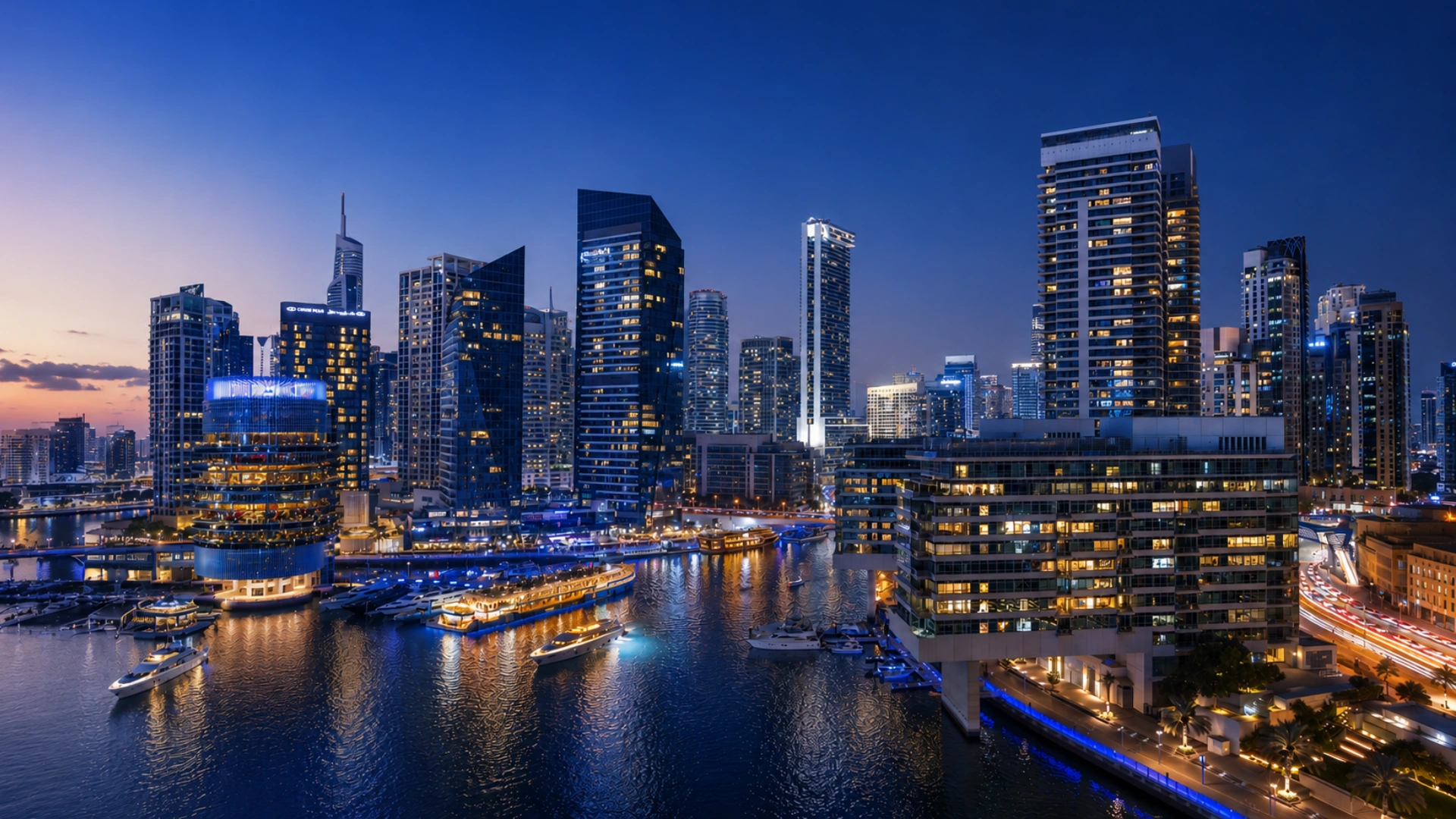
Dubai has topped the global rankings for greenfield foreign direct investment in the cultural and creative industries for the fourth year running, according to the Government of Dubai Media Office. The emirate pulled in 754 new projects in 2025, ahead of London, Singapore, Riyadh and Bengaluru, out of 233 cities tracked worldwide by Financial Times Ltd.’s fDi Markets data.
The numbers behind the ranking are hard to ignore. Those 754 projects created 19,304 new jobs and brought in 3.756 billion US dollars in capital inflows.
For context, London recorded 227 projects, Singapore 197, Riyadh 157 and Bengaluru 132, putting Dubai well ahead of the next closest competitor by volume, more than three times London’s project count. On capital inflows specifically, Dubai held the number two spot globally in the sector, meaning it didn’t just win on the number of deals but stayed near the top on the size of the money flowing in too.
Holding the top spot for four consecutive years is the more telling part of the story. A single strong year could be attributed to one large deal or a temporary policy push. A four-year streak points to something structural: an ecosystem that keeps attracting new projects year after year rather than a one-off spike.
Where the Investment Is Coming From
The source-country breakdown is worth a closer look if you are weighing where Dubai sits in the global investment landscape. India led on capital inflows into the sector, accounting for roughly 19 percent of the total, with the United States close behind at 17.5 percent, followed by China at 13 percent, Malaysia at 12 percent and the United Kingdom at 9 percent.
Measured by number of projects rather than capital, the picture shifts: the UK actually led with just over a fifth of all projects, with India close behind at 21 percent, followed by the United States at 14 percent and France at 4 percent.
That gap between the capital and project rankings is worth sitting with. It suggests UK investors are running a higher volume of smaller or mid-sized projects into Dubai’s creative sector, while US-linked investment tends to arrive in fewer but larger allocations.
India, notably, ranks near the top on both measures, which points to broad-based investment activity from Indian founders and firms rather than a handful of large outliers. If you are building from India and reading this, you are not an outlier. You are on the leading edge of the trend.
The Creative Economy Now Runs on Software and AI
Growth was not confined to traditional creative sectors like design, museums and the performing arts. A large share came from technology-adjacent industries, including specialised computer programming, data processing and digital services, AI-powered creative technologies, film, media and gaming, creative education, and the logistics and professional services that support the wider creative economy.
Officials pointed to this shift as evidence that Dubai’s creative economy is maturing alongside its tech and AI ambitions rather than sitting apart from them.
In practice, this means the creative industries category in Dubai now captures a much broader range of businesses than it would have a few years ago, extending well beyond arts and culture into software, content platforms and applied AI.
If you run a digital-content studio, a SaaS product, an AI tool or a media business, you fall squarely inside the category that just topped the world for a fourth year. Setting up that kind of company in a Dubai Free Zone is now a well-trodden path rather than an experiment.
Why Investors Keep Choosing Dubai
Dubai Culture and the Department of Economy and Tourism both credited the result to a combination of factors that will sound familiar to anyone who has looked into setting up here: full foreign ownership, efficient business setup processes, specialised creative and tech clusters, long-term residency pathways for talent, strong digital and logistics infrastructure, and direct access to both regional and global markets.
Dubai Culture’s Director General, Hala Badri, framed the results as a sign of the sector’s maturity rather than a novelty. Her comments centred on the idea that Dubai has built the kind of environment where ideas can be turned into functioning, scalable businesses, not just where investment happens to land. That distinction matters for founders. An environment built around ease of setup and long-term support tends to produce more durable business activity than one built purely around short-term incentives.
The Dubai Economic Agenda D33 and the Creative Economy Strategy have both played a role in shaping this environment, supporting investment not just in core cultural activity but across the full value chain, from digital services and advertising to distribution and creative commerce. These are multi-year government strategies rather than single initiatives, which is part of why the results have held steady across four consecutive years instead of fluctuating.
What This Means for Founders Looking at Dubai
For founders and creative businesses evaluating where to set up next, this kind of sustained ranking is a useful signal. Not because a ranking alone should decide where you incorporate, but because it reflects an environment that continues to attract capital and talent across exactly the sectors many international founders are building in: digital content, media, design, AI-driven services and professional services more broadly.
The practical takeaway is that Dubai’s advantages here are not limited to headline tax or ownership rules. Access to specialised clusters, long-term residency options and infrastructure built specifically around digital and creative business activity all show up as reasons investors keep coming back, and these are the same factors that matter to a founder deciding where to base a company day to day, not just where to park capital.
If you are exploring what a move into this ecosystem actually looks like in practice, from choosing a structure to getting a company incorporated and operational, our Dubai company setup service helps founders based outside the UAE do exactly that through a Dubai Free Zone.
Talk to one of our advisors about what you are building and where you are based, and we will map out the fastest, cleanest route to a Dubai company, and where residency and property fit in.
