


Executive Summary: Dubai leads as the world’s premier crypto cash-out destination. Investors can legally liquidate holdings through real estate ($100K-$10M+ with DAMAC, Binghatti), rent payments, luxury purchases, OTC desks, and our BurjX/OKX partnerships. USDT on TRC20/ERC20 dominates transactions. With 0% personal income tax, VARA regulatory framework, Golden Visa eligibility, and zero capital gains tax, Dubai offers the most tax-efficient, compliant pathway for converting crypto to fiat or tangible assets.
Dubai is the world’s leading destination for cashing out cryptocurrency – legally, tax-free, and at scale. Whether you’re converting $10,000 or $10 million, the UAE offers more compliant, efficient, and diverse cashout pathways than anywhere else on earth.
This guide covers every method available in 2026: crypto exchanges, peer-to-peer (P2P) platforms, OTC desks, real estate, luxury purchases, rent payments, and direct bank solutions via GenZone’s exclusive partnerships with BurjX and OKX.
At GenZone, we have helped over 1,100 clients – including crypto founders, Bitcoin millionaires, and institutional investors – structure their cashouts correctly. If you want to speak with an expert directly, book a free consultation here.
How to Cash Out Crypto in Dubai – Tax-Free and Legal
6 methods, what crypto is accepted, compliance rules and direct pathways – everything at a glance.
and income tax
Dubai 2025
methods available
by GenZone
regulator in UAE
- USDT on TRC20 – dominant standard, low fees, fast settlement
- USDT on ERC20 – widely accepted, higher gas fees
- Bitcoin (BTC) – OTC desks, developers, luxury dealers
- Ethereum (ETH) – accepted with volatility risk during transfer
- USDC – growing stablecoin alternative
- Altcoins and lesser-known tokens
- Meme coins or speculative assets
- Unlisted or obscure DeFi tokens
| Your Situation | Best Method |
|---|---|
| Under $50K, want speed | Crypto exchange – Binance or Bybit |
| Mid-size, avoid bank flags | P2P on Binance |
| $50K-$500K, need fiat fast | OTC desk |
| $500K+, need full compliance | GenZone + BurjX or OKX |
| $100K+, want hard assets | Real estate – DAMAC, Binghatti |
| Ongoing rent and lifestyle | Direct crypto payments in USDT |
- Use VARA-licensed and regulated service providers only
- Crypto must come from legal, traceable sources
- KYC is required at every legitimate provider – no exceptions
- UAE taxes you 0% – but your home country may still require reporting
- US citizens are taxed on worldwide income regardless of where they live
- Prepare source of funds documentation before any large transaction
Why Dubai Is the World’s #1 Crypto Cashout Destination
Before getting into the methods, it’s worth understanding why Dubai consistently outperforms every other jurisdiction for crypto liquidity.
0% Personal Income and Capital Gains Tax
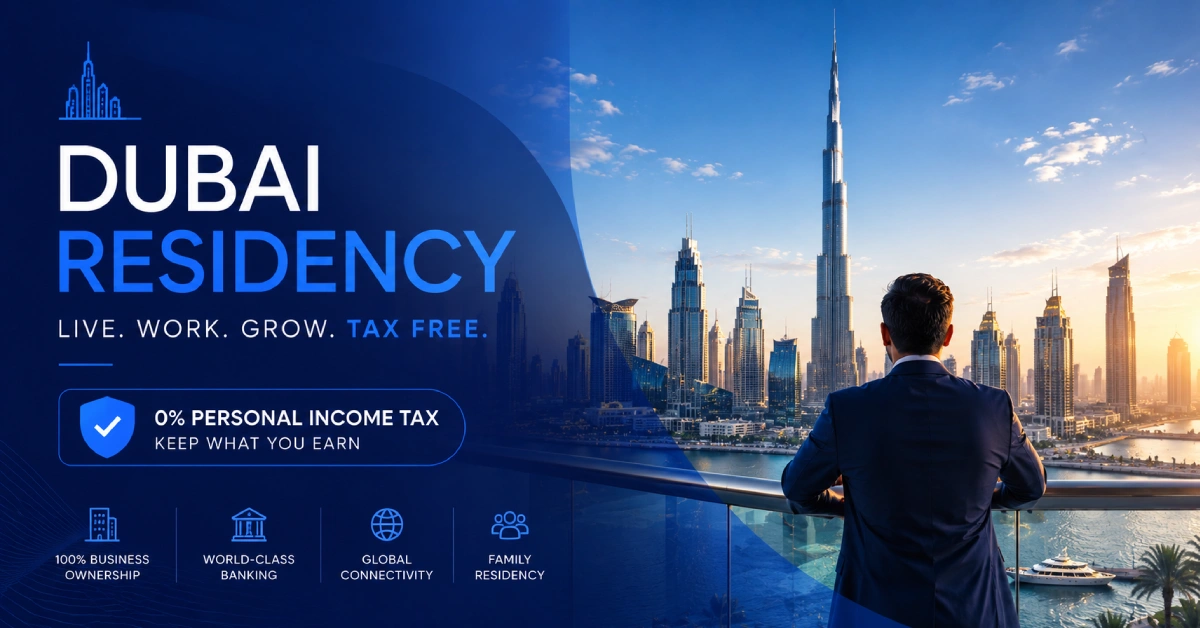
Dubai levies zero personal income tax and zero capital gains tax on residents. If you cash out $2 million in Bitcoin in Dubai as a resident, you keep all of it. No deduction. No reporting to a local tax authority. This is one of the most powerful financial advantages in the world.
Note: If you hold citizenship or tax residency in another country (such as the US, UK, or Australia), you may still have reporting obligations at home. Always consult a tax professional about your specific situation before making large transactions.
VARA: The Regulatory Framework That Makes It All Possible
The Virtual Assets Regulatory Authority (VARA) is the UAE’s dedicated crypto regulator – one of the most advanced in the world. VARA provides:
- Licensing frameworks for exchanges, OTC desks, and service providers
- AML and KYC compliance standards that protect both investors and institutions
- Clarity that makes banks, developers, and merchants comfortable dealing in crypto
Dubai was removed from the EU high-risk list for financial compliance, and standards have only tightened since then. This is not a grey market. It is a fully regulated, investor-friendly ecosystem.
Transaction Volume That Proves the Point
Dubai processed approximately AED 2.5 trillion ($680 billion) in crypto transactions in 2025. The infrastructure – exchanges, OTC desks, crypto-accepting merchants, and real estate developers – is built for volume.
What Crypto Is Accepted in Dubai?
Not all cryptocurrencies move equally well through Dubai’s ecosystem. Here is what you need to know before initiating any transaction.
Most Widely Accepted:
- USDT on TRC20 (Tron network) – the dominant standard. Preferred by OTC desks, landlords, and merchants due to low fees and fast settlement.
- USDT on ERC20 (Ethereum network) – widely accepted, slightly higher gas fees.
- Bitcoin (BTC) – accepted by most OTC desks, major real estate developers, and luxury dealers.
- Ethereum (ETH) – accepted but with volatility risk during the transaction window.
- USDC – growing acceptance as a stablecoin alternative.
Rarely or Not Accepted:
- Altcoins and lesser-known tokens
- Meme coins or speculative assets
- Unlisted or obscure DeFi tokens
Why does USDT dominate? Because it is pegged to the US dollar, eliminating price exposure between the moment you initiate a transfer and when the counterparty receives it. For high-value transactions, this stability is essential.
Always confirm the accepted network before sending. Sending USDT on the wrong network is irreversible.

The 6 Methods to Cash Out Crypto in Dubai
Method 1: Cryptocurrency Exchanges – Fast, Accessible, but Requires Caution
Platforms like Binance and Bybit – both VARA-approved – allow you to sell crypto and withdraw fiat directly to a UAE bank account. This is the most familiar route for most investors.
How it works:
- Deposit your crypto to the exchange
- Execute a sell order to convert to AED or USD
- Withdraw to your linked UAE bank account
The catch: Dubai banks have historically scrutinized large inbound transfers from crypto exchanges. Accounts have been flagged or restricted. This is improving as VARA regulation matures and banks grow more comfortable with compliant exchanges, but it remains a risk for large-volume cashouts.
Best for: Smaller to mid-size cashouts (under $50,000) where speed matters more than discretion.
Method 2: Peer-to-Peer (P2P) Transactions – Bypass Banking Friction
P2P features within exchanges like Binance allow you to trade directly with another person rather than the exchange itself. You sell your crypto to a verified buyer, and they send you a bank transfer directly.
Why this matters: Because the inbound payment comes from an individual, not from an exchange, banks are less likely to flag it. This is one of the cleanest ways to get money into a UAE bank account without triggering compliance alerts.
How to stay safe on P2P:
- Only trade with users who have high transaction counts and strong ratings
- Use exchanges that offer escrow – the crypto is held until payment is confirmed
- Do not release crypto before confirming the bank transfer has arrived
- Keep records of every transaction for compliance purposes
Best for: Mid-size cashouts where you want bank-friendly fiat delivery without using an OTC desk.
Method 3: OTC Desks – The Professional Standard for Large Transactions
Over-the-counter (OTC) desks are the preferred method for high-net-worth individuals and institutional investors cashing out large sums. Dubai has hundreds of regulated OTC operations, and they handle everything from cash delivery to bank wires to manager’s cheques.
What OTC desks offer:
- Cash (AED) for in-person transactions
- Bank transfers to local or international accounts
- Manager’s cheques (required for real estate purchases, car dealerships, and government fees)
- Discretion – transactions are not executed on a public order book, eliminating slippage
- Compliance support – reputable desks handle all KYC and AML documentation
How a typical OTC transaction works:
- Contact the OTC desk and agree on a rate
- Transfer your crypto to their wallet
- Receive cash, a bank transfer, or a cheque – usually within hours
What to look for in an OTC desk:
- VARA-regulated or UAE-licensed
- Established track record with verifiable reviews
- Clear documentation process for large transactions
- No pressure to skip KYC steps
GenZone’s partnerships with BurjX and OKX provide our clients with direct access to institutional-grade OTC services, including private relationship managers, compliant bank transfers, and full documentation. This is especially valuable for first-time cashouts or transactions above $500,000.
Best for: Large-volume cashouts ($50,000 to $10M+) where privacy, speed, and compliance are all required.
Method 4: Real Estate Purchases – Convert Crypto Into a Hard Asset
Buying property in Dubai is one of the most powerful ways to deploy large crypto holdings – and many developers accept crypto directly, making this a true cashout in the form of a tangible asset.
Why this works so well:
- No need to convert to fiat first (for crypto-accepting developers)
- You can liquidate $100,000 to $10M+ in a single transaction
- Property in Dubai has strong appreciation history and rental yields of 6–10%
- Ownership qualifies you for Golden Visa eligibility (properties above AED 2 million)
Off-plan properties from developers like DAMAC and Binghatti accept crypto directly – usually USDT or Bitcoin – with payment installments tied to construction milestones. This is the most flexible structure for crypto buyers.
Ready properties (secondary market) typically require conversion to fiat first via an OTC desk, followed by a manager’s cheque or bank transfer at the Dubai Land Department.
One example: A client purchased a luxury villa on Palm Jumeirah, paying 20% of the purchase price in USDT directly to the developer. The remainder was handled via traditional bank transfer.
Important: Not every developer or agent is experienced with crypto transactions. Working with a structured provider like GenZone ensures the deal is set up correctly from a legal and compliance standpoint.
Best for: Investors with large holdings ($100K+) who want to deploy into a hard asset, earn rental yield, or qualify for residency.
Method 5: Rent, Luxury Purchases, and Everyday Spending
Dubai’s crypto adoption extends beyond big transactions. Here is where you can spend crypto directly in everyday life.
Paying Rent in Crypto
A growing number of landlords and real estate agencies – particularly in luxury and expat-heavy communities – accept rent in USDT. Many of our clients from the US, UK, and Canada are genuinely surprised that this is possible. It eliminates the need to convert and transfer fiat, saving time and fees.
Always confirm the accepted network and agree on conversion terms in writing before the lease is signed.
Luxury Cars
Second-hand luxury dealers openly accept crypto – you can walk into many showrooms in Dubai and pay for a Ferrari, Lamborghini, Range Rover, or Bentley in USDT or Bitcoin. Brand-new official dealerships are less consistent, but the secondary luxury market has fully embraced crypto payments.
Watches, Jewellery, and High-End Goods
Retailers across Dubai Marina, Business Bay, and Downtown Dubai routinely accept crypto for:
- Rolex, Audemars Piguet, Patek Philippe
- Designer jewellery and luxury accessories
- High-end electronics and collectibles
Best for: Ongoing lifestyle spending and mid-size purchases where direct crypto payment saves conversion steps.
Method 6: Direct Bank Solutions via GenZone Partnerships
For clients who need structured, recurring cashout access tied to a Dubai bank account, GenZone offers two institutional-grade solutions.
GenZone + BurjX
BurjX is a regulated UAE financial institution specialising in crypto-to-fiat conversions for private and institutional clients. Through our partnership, GenZone clients receive:
- Personal and institutional account openings
- A dedicated private relationship manager
- Direct OTC-to-bank-account transfers with full legal compliance
- Access tailored to high-net-worth individuals
GenZone + OKX
OKX is one of the world’s leading regulated crypto exchanges. Through our partnership:
- Personal and institutional account openings
- Private relationship manager assigned from day one
- Legal, compliant crypto-to-fiat conversions
- Direct transfers to Dubai-based bank accounts
How GenZone fits in: We do not execute the transfers. We build the foundation – company formation, compliance structure, banking setup – so that you can use BurjX or OKX smoothly, safely, and at scale. Think of it as the infrastructure layer before the transaction layer.
Best for: Investors with large or ongoing cashout needs who want a fully structured, compliance-first solution with dedicated support.
Legal Compliance: What You Must Know
Cashing out crypto in Dubai is 100% legal – provided you meet the following conditions:
- Use regulated service providers. VARA-licensed exchanges and compliant OTC desks are not optional. Unlicensed operators expose you to legal risk and potential fund loss.
- Your crypto must come from legal, traceable sources. Source of funds documentation will be requested for any significant transaction. Prepare it in advance.
- Complete KYC. Every legitimate exchange, OTC desk, and banking partner requires identity verification. This is not a barrier – it is protection.
- Comply with your home country’s tax laws. UAE taxes you at 0%, but your home country may not. US citizens are taxed on worldwide income regardless of where they live. UK and Australian residents have reporting obligations until formal tax residency is established elsewhere. Consult a tax professional before large transactions.
Common compliance mistakes to avoid:
- Using unregulated or informal OTC desks to avoid documentation
- Sending large amounts to banks without preparing source of funds evidence
- Assuming Dubai residency automatically eliminates home country tax obligations
- Skipping KYC under any circumstances
Why Set Up a Company in Dubai for Crypto Cashouts?
Individual cashouts work well, but if you are dealing with large or recurring volumes, a Dubai company structure provides meaningful advantages.
Banking access: Corporate accounts are easier to open and maintain for crypto-related transactions than personal accounts in many cases.
Regulatory credibility: A licensed Dubai company signals legitimacy to banks, OTC desks, and developers.
Tax efficiency: Corporate profits in Dubai are taxed at 0% for qualifying free zone entities (subject to substance requirements).
Residency: Company formation provides an employment visa, which in turn provides UAE residency – unlocking Golden Visa pathways, banking, and full access to all cashout methods.
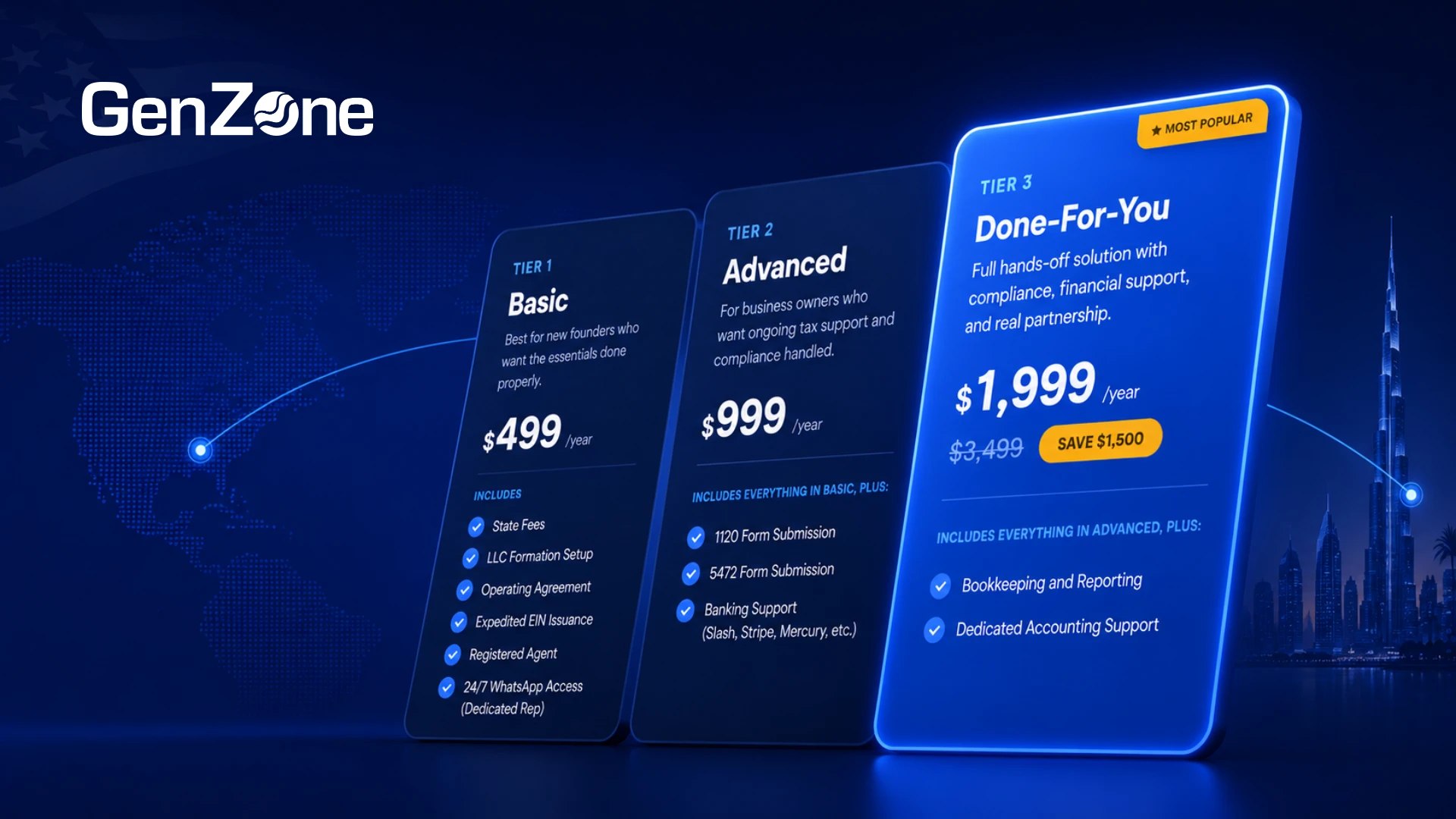
GenZone handles the full setup: Free zone company formation, trade license, Emirates ID, bank account opening, and onboarding with BurjX or OKX. The process typically takes three to four weeks.
Choosing the Right Method: A Quick Reference
| Situation | Best Method |
|---|---|
| Under $50K, want speed | Crypto exchange (Binance/Bybit) |
| Mid-size, avoid bank flags | P2P on Binance |
| $50K–$500K, need fiat fast | OTC desk |
| $500K+, need full compliance | GenZone + BurjX or OKX |
| $100K+, want hard assets | Real estate (DAMAC, Binghatti) |
| Ongoing rent and lifestyle | Direct crypto payments |
| Want a Ferrari | Luxury second-hand dealers |
Frequently Asked Questions
Is it legal to cash out crypto in Dubai?
Yes, completely legal. Dubai has one of the world’s most advanced crypto regulatory frameworks through VARA. As long as you use licensed providers and your funds come from legal sources, there are no restrictions.
What is the best crypto to use for cashouts in Dubai?
USDT on TRC20 is the most widely accepted and cost-efficient. Bitcoin and Ethereum are accepted by most major providers but carry volatility risk during the transaction window.
Can I cash out without a UAE bank account?
Yes – cash payments via OTC desks and direct crypto purchases (real estate, cars, goods) do not require a bank account. For bank transfers, you will need a UAE account, which GenZone can help you set up.
How long does a cashout take?
P2P and OTC transactions can settle in hours. Bank transfers may take one to three business days. Real estate transactions depend on the developer and property type.
Do I pay tax on crypto gains in Dubai?
Dubai levies 0% personal income and capital gains tax. However, if you remain a tax resident in another country, you may still have reporting obligations there. Always get professional tax advice specific to your situation.
What is an OTC desk and why use one?
An OTC desk converts your crypto directly into cash, bank transfers, or cheques. They are preferred for large transactions because they offer privacy, no market slippage, full compliance documentation, and personalised service – things that public exchanges cannot match.
Can I buy property in Dubai with crypto?
Yes. Developers like DAMAC and Binghatti accept crypto directly for off-plan properties. Ready properties generally require conversion to fiat first. GenZone can guide the full process.
What is the minimum amount to cash out via OTC?
Most OTC desks in Dubai work with amounts from $10,000 upward. For amounts below that, a regulated exchange or P2P is more practical.
Is USDT on TRC20 or ERC20 better for Dubai?
TRC20 is generally preferred due to significantly lower transaction fees and faster confirmation times. Always confirm which network your counterparty accepts before sending.
Can I use crypto to pay rent in Dubai?
Yes, and it is increasingly common – especially in luxury and expat communities. Most landlords accepting crypto prefer USDT. Confirm the network and terms in your tenancy agreement.
Final Thoughts
Dubai in 2026 offers more ways to cash out cryptocurrency – legally, efficiently, and tax-free – than any other place in the world. Whether you are liquidating a small position, deploying millions into real estate, or building an ongoing cashout infrastructure through a Dubai company, the pathways are clear and well-regulated.
The key is working with the right structure from the start. Unregulated shortcuts create compliance risk. The right setup – with a licensed company, proper banking, and access to institutional partners – makes every transaction smooth, documented, and defensible.