







Executive Summary: Many founders mistakenly believe opening a UAE bank account grants them Dubai’s 0% tax advantage. It doesn’t. Tax residency is determined by where you legally reside, not where you bank. Achieving genuine UAE tax freedom requires four components: a properly incorporated UAE company, a residency visa, sufficient physical presence (90–183 days), and a Tax Residency Certificate. Remote corporate banking is real and valuable, but only as the operational layer of a complete, compliant structure.
Every month, hundreds of our clients ask the same questions about opening a bank account in the UAE. People from across the world, be it Toronto, Munich, Paris, Sydney, or New Delhi, are eager to know: How do I open a UAE bank account remotely? Which banks accept non-residents? What documents do I need? They have done their research, read the articles, scrolled through the forum threads.
And after all of it, something still feels missing.
It should. Because what most of these people are not actually looking for is a bank account. They are looking for a way out of paying higher taxes at home. Dubai is where they heard that happens. And somewhere between a random YouTube video or forum post, they absorbed the idea that a UAE bank account is the mechanism that makes it happen.
It is not.
A Dubai bank account is real, useful, and genuinely powerful inside the right structure. But on its own, it changes nothing about what you owe your home country. Your tax authority does not care where you bank. They care where you are legally tax resident. Those are two completely different things, and confusing them is costing founders real money, real time, and in some cases serious compliance problems they never saw coming.
This article covers what remote UAE banking actually delivers, what it cannot do alone, and what the complete picture looks like for founders and investors who achieve the tax freedom they were searching for. And if you want to see exactly how a complete remote Dubai setup works in practice, our remote setup and banking case study documents how we incorporated a company and opened a fully functional Emirates NBD account for a client from London without him ever setting foot in the UAE.
Remote UAE Banking: What It Does and What It Does Not
A UAE bank account is real, useful, and powerful. But it is not what creates UAE tax freedom. Here is the complete picture.

- Send and receive international payments at competitive rates
- Hold and convert multiple currencies: USD, EUR, GBP, AED
- Pay global suppliers and contractors by bank transfer
- Manage treasury across jurisdictions from a single account
- Open remotely in approximately 7 working days with correct docs
- Create UAE tax residency or change your home country tax status
- Replace Stripe or PayPal, both remain limited from UAE accounts
- Protect you from home country tax authority if structure is incomplete
- Work without a valid UAE free zone company behind it
- Replace a US LLC for founders who need US payment infrastructure
- You can genuinely spend 90 to 183 days per year in the UAE
- Your annual tax saving meaningfully exceeds the cost of maintaining the structure
- Your business operates internationally and UAE banking serves those transactions well
- You want to build your life partly or fully in Dubai
- US citizens and green card holders, worldwide income taxation applies regardless
- The cost of annual maintenance and required travel does not justify the saving
- You cannot spend enough time in the UAE to qualify for the TRC
- You want a bank account alone without the rest of the structure
The Misconception About UAE Banking
Here is what most people get wrong. A UAE bank account operates within the UAE’s banking system. It does not place you within the UAE’s tax system. Those are two entirely different things, and the distinction is what matters.
Tax residency is a legal status. It is determined by where you live, how many days you spend in a country, where your business is genuinely managed and controlled, and in many jurisdictions, where you hold citizenship.
The UK, Canada, Australia, Germany, and France each have their own specific tests for establishing and exiting tax residency. Some use day-count thresholds. Some look at your center of life. Some require you to actively sever ties before they release you from their tax net.
None of these tests have anything to do with where your bank account is held.
When you open a UAE corporate or personal bank account, you are gaining access to the UAE’s banking infrastructure. You are not acquiring UAE tax residency. You are not exiting your home country’s tax system. Your income remains taxable wherever you are legally resident, regardless of which country processes the transaction or holds the funds.
Most countries also now require disclosure of foreign financial accounts. So an undisclosed UAE account does not create tax freedom. It creates an additional compliance obligation on top of your existing tax liability.
The bank account is a real and useful tool. But it is the final component of a structure that works, not the entry point into one.
What Actually Creates UAE Tax Freedom

The UAE’s 0% personal income tax is genuine, stable, and accessible to foreign nationals who set things up correctly. It is not a loophole. It is the deliberate policy of a government that has never taxed personal income and has built its entire economic model around attracting international talent and capital. But it requires four things to work in a way that is both legally sound and internationally defensible.
A properly incorporated UAE company is the first requirement. Whether through a free zone or the mainland, a legal entity in the UAE is what creates a legitimate connection between a founder’s income and the UAE as a jurisdiction. Without a UAE company, income has no genuine UAE nexus regardless of where it is banked. This is the foundation everything else sits on.
A UAE residency visa is the second requirement. This is the personal legal status that connects the founder to the UAE rather than just their business. It requires a physical process: medical examination, biometrics, visa stamping, and Emirates ID issuance. This step cannot be completed remotely.
The Dubai residency guide covers every visa pathway including the free zone company route, the Golden Visa via property investment, and the two-year investor visa. Critically, there is no deadline forcing visa activation immediately after company incorporation. A founder can have a fully operational company and a live corporate bank account before ever stepping on a plane to Dubai. The remote setup case study documents exactly how this was done for one client.
Physical presence is the third requirement. The UAE requires a founder to spend time in the country to qualify as a tax resident. Since March 2023, the minimum threshold for a domestic Tax Residency Certificate is 90 days of physical presence per year, provided the founder holds a UAE residency visa and has either a permanent place of residence or an active business in the UAE.
For the international Tax Residency Certificate, which is what most founders need to formally invoke treaty protections with their home country, the standard is 183 days. Days do not need to be consecutive. The full breakdown of how the day count works is covered in the dedicated guide.
The Tax Residency Certificate itself is the fourth requirement. Issued by the UAE Federal Tax Authority through the EmaraTax portal, the TRC is the formal document that proves to a home country tax authority, to banks, and to international counterparties that the UAE is the founder’s tax home.
Without it, treaty benefits cannot be formally claimed. GenZone has a 100% TRC approval rate across all clients. The tax and accounting team handles TRC applications and ensures the full structure remains compliant with both UAE and home country requirements.
A UAE bank account fits into this picture as the operational infrastructure that comes after the structure is in place. It is how a founder manages their finances once legitimately established in the UAE. It is not how they become legitimately established. This is the distinction that most remote banking guides fail to make.
What Remote Banking Is and What It Can Do
With the misconception addressed, here is what remote UAE corporate banking genuinely offers. The value is real, it is just different from what most people initially think.
For a properly incorporated UAE free zone company, a UAE corporate bank account is the operational core of the structure. It allows the company to send and receive international payments, pay suppliers and contractors globally, hold and convert multiple currencies, and manage treasury across jurisdictions. UAE banks have invested heavily in cross-border infrastructure. The speed, cost, and reliability of international transactions from a UAE corporate account is genuinely competitive with anything available globally.
The remote element is specifically about corporate accounts. A UAE company with a valid trade licence can apply for a corporate bank account while its founders remain outside the UAE. This is the legitimate version of what most people are searching for when they type “open UAE bank account remotely.” But the key requirement is the UAE company. Without it, there is no remote banking option worth pursuing.
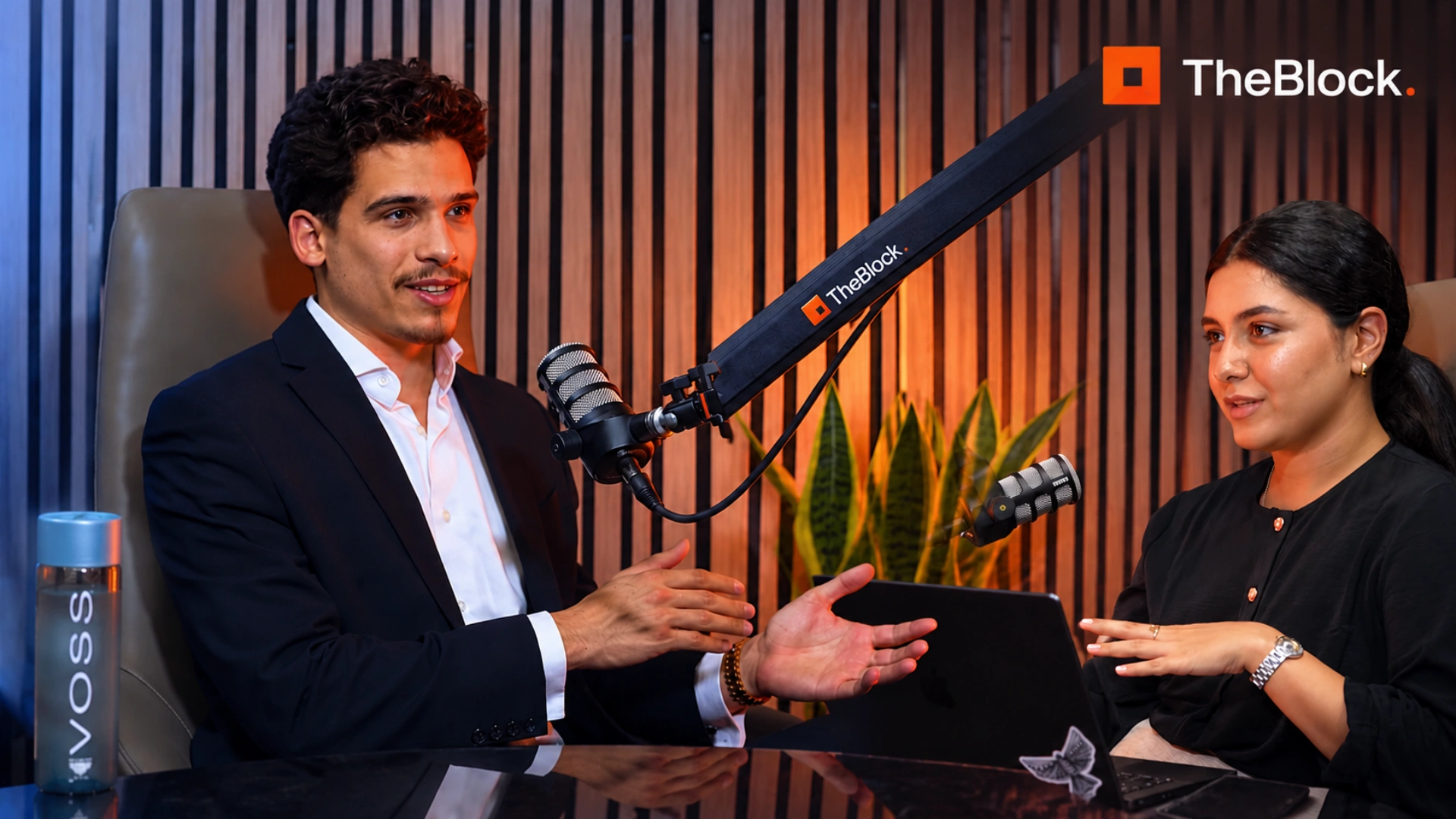
Kevin McKenzie, GenZone co-founder who has structured over 2,500 UAE corporate bank accounts across 50 countries, is precise on what this actually looks like in practice.
“You don’t have to travel here. That means you don’t have to have your residency visa, you don’t have to have your local phone number. But you do have to have a Dubai company. And the only type of Dubai company you can set up without being here is a free zone company.”
Whether a founder has visited Dubai recently also matters. Founders who have travelled to Dubai within the last six to twelve months find the remote banking process significantly more straightforward. For those who have not, the process requires a visit to a local branch of the bank in their home country within 60 days of the account being opened. Emirates NBD, one of the most established options for this process, has a branch in London, making it accessible for European founders without a Dubai trip.
Personal non-resident banking in the UAE is a completely different and far more constrained product. It is limited to savings accounts at a small number of banks, requires physical presence to finalise, carries minimum balances of AED 25,000 to AED 30,000 or more, and approval is fully at the bank’s discretion regardless of documentation quality. The corporate route through a properly incorporated company is the only path that delivers full banking functionality.
The Exact Requirements: What Kevin Specifies
Kevin is precise on what is needed to open a UAE corporate account remotely, and that precision is what separates successful applications from failed ones.
You need a passport and an international phone number. A local Dubai number is not required. You need a tenancy contract or proof of address from your current home. If you do not have a tenancy contract, a letter confirming that you live at a specific address with a named person also works.
You need bank statements from your existing business account covering the last three to six months. And you need to be ready to provide invoices or other supporting documentation if the bank’s compliance team asks for it during review.
Beyond these basics, banks in 2026 want a clear business profile describing what the company does, who its clients are, where revenue comes from, and what transaction volumes to expect. A board resolution authorising the account opening, the company’s memorandum and articles of association, and a visual ownership structure chart complete the standard package.
How this documentation is assembled and presented matters almost as much as what it contains. A clean, coherent application tells a story. A disorganised one generates questions and delays.
The process, when everything is in order, takes approximately seven working days.
Industries and Countries Where Remote Banking Does Not Work

Kevin is explicit about the restrictions, and this honesty is part of what makes our guidance trustworthy.
Certain industries are excluded from the remote corporate banking process regardless of documentation quality. Oil and gas, gold and precious metals trading, money exchange and remittance, corporate service providers, and cryptocurrency exchange and trading businesses all fall outside the eligible categories.
Kevin notes that GenZone itself, as a corporate service provider, would fall into the restricted category. For founders in consulting, technology, marketing, digital services, media, coaching, e-commerce, and most service-based businesses, the process is available and straightforward.
On nationality: founders from OFAC-sanctioned countries face restrictions regardless of business type or application quality. For the majority of founders from Canada, the UK, Australia, Europe, and most of Asia, this is not a barrier.
Knowing before you start whether your industry and nationality are eligible saves time and prevents the frustration of preparing a complete documentation package only to discover a structural barrier exists.
What a UAE Bank Account Cannot Do for Your Payments
This is a practical point that matters and that most banking guides either get wrong or avoid entirely.
A UAE corporate bank account is excellent for international wire transfers, multi-currency treasury management, paying and receiving global payments by bank transfer, and operating as the financial core of an internationally incorporated business. It is not the reliable path to Stripe or PayPal access.
Stripe’s availability in the UAE has improved but remains restricted for certain business types and nationalities. PayPal’s UAE product is considerably more limited than what is available in North American and European markets. Neither should be assumed to work seamlessly from a UAE corporate account without verifying the specific situation.
For founders who need Stripe, PayPal, Mercury, Relay, or broader US payment infrastructure, a US LLC is the direct and reliable solution. A US LLC registered in Wyoming or Delaware gives a non-resident founder full access to these processors without requiring US citizenship or residency.
Many GenZone clients run a UAE free zone company for tax residency alongside a US LLC for US payment infrastructure. GenZone handles both structures across 50 countries and advises on which combination fits each situation.
Banking Relationships: The Factor Most Guides Ignore
The UAE banking sector is relationship-driven in a way that most guides understate or ignore entirely. The difference between a smooth corporate account approval and a prolonged compliance queue is frequently not the documentation itself, but who introduces the application and to whom.
Kevin is direct: “We have the best relationship managers at the bank and we know how to get things done right the first time.”
A credible introduction to the right relationship manager at the right bank means an application arrives with context rather than as a cold submission to a compliance queue. This is not a vague advantage. It is the practical difference between seven working days and several months of back-and-forth, and in some cases the difference between approval and rejection for applications that are perfectly legitimate on their merits.
For a detailed breakdown of the specific reasons UAE banks reject business account applications and how to address each one before applying, the guide on why Dubai banks reject business accounts covers this in full. Wio Bank is the most accessible entry-level option for newly incorporated companies, handling onboarding entirely through a mobile app with no minimum balance requirement. The top 3 online banks in Dubai covers the options in full.
When This Makes Sense and When It Does Not
The complete UAE structure, company plus banking plus residency plus TRC, makes clear financial sense in specific circumstances. Being honest about when it does and does not make sense is part of what makes this guide useful rather than promotional.
It makes strong sense when a founder is internationally mobile and can genuinely spend 90 to 183 days per year in the UAE, when the business operates internationally and UAE financial infrastructure serves those transactions well, when the annual tax saving from shifting personal tax residency to a 0% jurisdiction meaningfully exceeds the cost of maintaining the structure, and when the founder is planning to build their life partly or fully in Dubai.
It makes less sense when a home country taxes worldwide income regardless of where the founder is tax resident, which applies specifically to US citizens and green card holders. When the cost of annual company maintenance, licence renewals, accounting obligations, and the required travel does not justify the tax saving at a given income level. When the founder cannot genuinely spend enough time in the UAE to qualify for tax residency and obtain the TRC that makes the position internationally defensible.
The bank account alone, without the rest of the structure, does not make sense as a standalone goal. It will not change a tax position, will not protect against a home country tax authority, and the effort of obtaining a non-resident personal savings account rarely justifies what it delivers.
The Complete Picture

Most people who find this article started by searching for something that would let them keep more of what they earn. That instinct is right, and Dubai genuinely delivers it. But it delivers it through a structure, not through a bank account.
Company incorporation is the foundation. Residency activation is the legal status. Physical presence is the qualifying condition. The Tax Residency Certificate is the proof.
The bank account is the operational infrastructure that sits on top of all of it and allows the whole thing to function in practice.
The remote element of this, the ability to get a free zone company incorporated and a corporate bank account live before ever travelling to Dubai, is real and genuinely valuable. It means a founder can have an operational UAE business with full banking access while planning their residency trip on their own timeline. That is what GenZone did for the client in the remote setup and banking case study, and it is available to any founder whose business profile and nationality meet the eligibility criteria.
GenZone has built this structure for over 1,100 founders across 50 countries, has opened more than 2,500 corporate bank accounts in the process, and has never had a TRC application rejected. For founders who need US payment infrastructure alongside their UAE setup, the US LLC service handles that separately, and many clients run both structures in parallel.
When you are ready to understand what the right structure looks like for your specific situation, the Dubai company setup page covers all options, and a free strategy call with the GenZone team gets to the specifics directly.
